

Super 8 Film
Kodak's 1965 cartridge film, and the format most home movies from the late sixties through the eighties are actually on. Bigger picture than the 8mm before it, sometimes with sound along the edge, and scanned here one frame at a time.
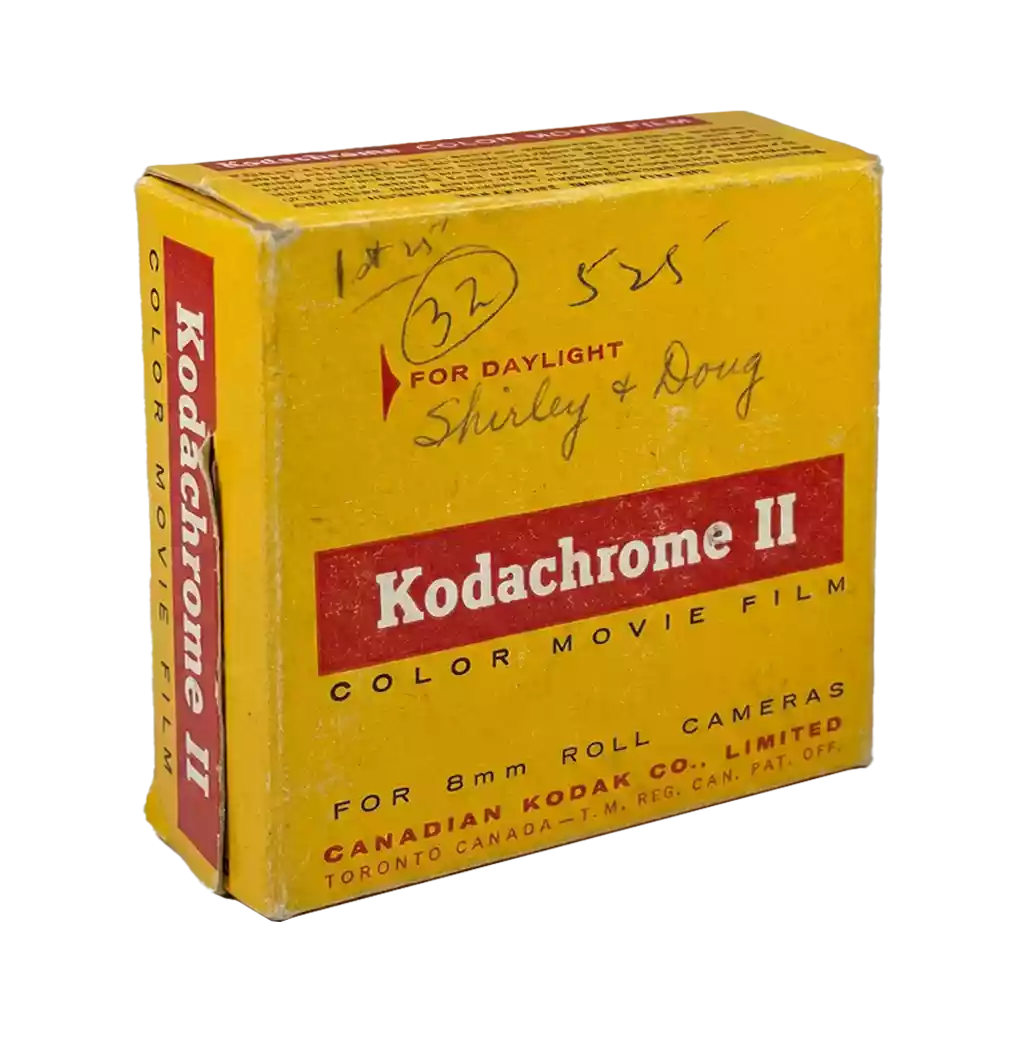
Colour has been fading for fifty years
Super 8 stock drifts, often heavily towards red. Scanning it captures what is left; waiting means capturing less.
The sound gets skipped
Sound Super 8 carries audio on a magnetic stripe. Plenty of services ignore it, and you find out when the file comes back silent.
Old splices let go
Sixty-year-old tape and cement joints give way under a projector, and they give way at speed.
Why Super 8 Looks Better Than Regular 8
Super 8 arrived in 1965 and did something clever. It kept the same width of film but shrank the sprocket holes right down, which left considerably more room for the picture. On the same eight millimetres of film you get a noticeably larger frame, and that shows as a sharper, cleaner image when it is scanned properly.
It also came in a drop-in cartridge instead of a reel you had to thread and flip halfway, which is why so many more families shot Super 8 than shot the format before it.
If your reels turn out to be the older Regular 8, they are on the 8mm film page, and the film reel service covers both together.
Reading Your Own Reels
Small sprocket holes, big frame
Hold the film up. If the holes along the edge are small and sit level with the middle of each frame, it is Super 8. If they are large and sit between the frames, it is the older Regular 8. That one look is the whole identification, and you do not need to do it yourself if you would rather I did.
Some of it has sound
Later Super 8 could record sound onto a thin magnetic stripe running down the side of the film. If your reels have a rust-coloured band along one edge, there is likely audio on them. Where there is, I read it along with the picture. Many services quietly skip it, and you would only find out when the file came back silent.
Three and a half minutes a reel
A 50 foot Super 8 reel runs about three and a half minutes at the usual filming speed. As with all home movie film, a big-looking box turns into less footage than expected, which is why I measure your reels in front of you before putting a number on the job.
How It Works
Drop-Off in Colwood
Use my online form to book a private drop-off time. This ensures I can review your items with you personally when you arrive.
Approve Estimate
Once I have your project, I don't just process it. I inspect the condition of every tape and page. If I find something that needs special attention, I’ll call you.
Enjoy and Share
You'll get a private link to everything, and a USB drive to keep if you want one. You can finally watch your memories on your phone, tablet, or TV.
Priced by the reel, measured with you.
A standard 50 foot reel is $39, and $33.50 each once you reach 10 reels. Bring your reels to Colwood and I will measure them with you and give you a written figure before anything is spliced onto the machine. Looking is always free.
Fading, Splices and the Smell Test
Super 8 colour fades, and it fades unevenly. Reels shot on some stocks have drifted heavily towards red over fifty years. A careful scan captures what is actually still on the film, and colour work to bring it back is a separate job that I will quote rather than assume.
The two things that stop a reel running are dried-out splices and film that has started to break down. A box that smells sharp and vinegary when you open it is telling you the film base is deteriorating, and that reel goes to the front of the queue.
Questions People Ask
Do my Super 8 reels have sound?
Look along one edge of the film for a narrow rust-coloured stripe. If it is there, there is probably a soundtrack, and I read it as part of the transfer. If there is no stripe, the film is silent and always was. Either way you will know before you pay, because I check when I look at the reels with you.
My film has gone very red. Can that be corrected?
Often a good deal of it can, but that is colour work rather than scanning and I quote it separately. The scan itself captures what is on the film today as faithfully as possible. I would rather show you the honest scan first and let you decide whether to pay for the correction than bundle it in and surprise you.
Is Super 8 the same as 8mm?
They are the same width of film and different formats. Super 8 came out in 1965 with much smaller sprocket holes, which left room for a bigger picture. Regular 8 is the older one. Both are the same price here and you do not need to sort them before bringing them in.
Bring the reels, cartridges and all.
You do not need to unspool anything, sort anything, or know what is on it. Book a drop-off in Colwood and we will go through the box together.